

What is Natural Gas Used For?
There are many uses of natural gas, all of which benefit our society. From the early 19th to 20th centuries, natural gas was primarily used to power lights in buildings and on streets. Today, modern technology has allowed us expand the uses of natural gas, some of which include:
- Electricity Generation – The primary use for natural gas is to generate electrical power. Natural gas is the source of more than 25% of the nation’s electricity. According to the Energy of Information Administration, in 2035, 46% of new generating capacity added to the grid will come from natural gas.
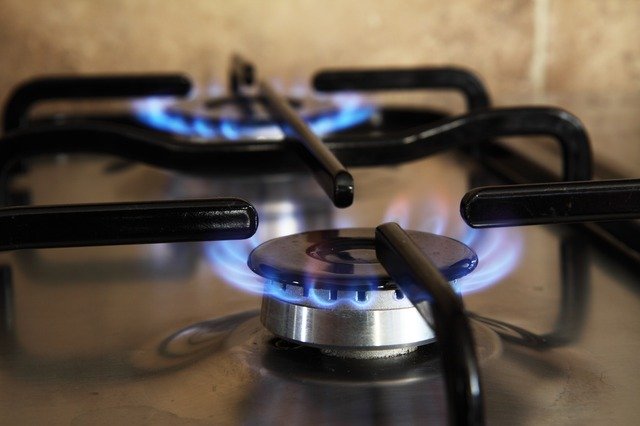
- Heating – Heat produced from natural gas feels warmer than heat that is produced by an electrical pump. More than half of American homes use natural gas to provide heat, hot water and fuel for cooking. More businesses are turning to natural gas to heat offices spaces too, as it is more cost effective than electric heating pumps.
- Cogeneration and Trigeneration – Electrical energy and heating can be used simultaneously through the technological process of cogeneration, or in simpler terms combined heat and power. Trigeneration is the combination of electricity, heating and cooling. Both processes can increase energy efficiency by 75 to 80 percent.
- Transportation – Most people don’t realize that natural gas has been used to power vehicles since the 1930’s. Now, more than 150,000 vehicles on America’s roads and more than 5 million worldwide are powered by natural gas. This number is expected to increase due to the popularity of natural gas being used to fuel buses and trucks. Natural gas used in transportation reduces harmful emissions released into the air, which decreases smog pollution.
- Manufacturing – Steel and paper production uses natural gas to generate process steam for industrial applications. Natural gas is also used for petrochemicals, which are incorporated in plastics, fertilizers, synthetic fibers, cosmetics and medicines.
The many uses for natural gas have increased its use as a fuel source domestically and around the world. As society continues to use natural gas instead over other energy sources, we can reduce pollution and benefit from economic, public health and environmental benefits.
Source: https://www.api.org/news-policy-and-issues/natural-gas-solutions/natural-gas-used

Myths About Fracking
Some say the fracking debate is over, while others think the debate is just getting started. Those who think the debate is just getting started believe fracking causes earthquakes and contaminates drinking water. Many people believe the states are doing a poor job of regulating the fracking process. However, these arguments are nothing but myths. Here are 5 fracking facts to prove the debate is over.
Fracking is short for hydraulic fracturing, a method of drilling used to releases natural gas from shale rock formations deep beneath the ground. Hydraulic fracturing methods have been used for decades. Advances in technology have made fracking more efficient and accessible as ever.
Myth 1. Fracking causes drinking water contamination
Since the late 1940s, the U.S. has used hydraulic fracturing as a method to release gas. The combinations of fracking and horizontal drilling lets drillers extract oil and gas from areas that, in the past, were impossible to reach.
Drinking water is located just a few feet underground, while fracking takes place more than 7,000 feet underground. Solid rock separates the oil and gas deposits from shallow ground water.
Myth 2. Fracking causes earthquakes
Federal officials say the act of fracking does not cause earthquakes. Fracking in this respect is separate from wastewater disposal. An experts from the U.S. Geological Survey told NPR, “Fracking itself probably does not put enough energy into the ground to trigger an earthquake. That’s really not something that we should be concerned about.”
Myth 3. States are not regulating fracking efficiently
States insist that fracking and wastewater disposal is done properly with the highest level of efficiency and safety. Fracking is better regulated by the state because the state understands its environment and how fracking should regulated.
“States are stepping up and doing a good job,” says federal EPA Administrator Lisa Jackson.
Source: https://www.api.org/oil-and-natural-gas/energy-primers/hydraulic-fracturing/what-are-fracking-myths

What is H₂S
Hydrogen sulfide is the chemical compound with the formula H2S. It is a colorless chalcogen hydride gas with the characteristic foul odor of rotten eggs. It is very poisonous, corrosive, and flammable. Hydrogen sulfide is often produced from the microbial breakdown of organic matter in the absence of oxygen gas, such as in swamps and sewers; this process is commonly known as anaerobic digestion which is done by sulfate-reducing microorganisms. H2S also occurs in volcanic gases, natural gas, and in some sources of well water. The human body produces small amounts of H2S and uses it as a signaling molecule.

Who consumes the most natural gas?
Natural Gas Consumption
- United States of America 773,200,000
- Russia 453,300,000
- China 181,100,000
- Iran 170,200,000
Source: https://www.citypopulation.de/en/world/bymap/NaturalGasConsumption.html

Is natural gas a liquid or gas?
Natural gas is transported on specially designed ships as liquefied natural gas (LNG). LNG is natural gas that is cooled to -260° Fahrenheit, the temperature at which natural gas becomes a liquid. The volume of the liquid is 600 times smaller than the gaseous form.
Source: https://www.eia.gov/energyexplained/natural-gas/liquefied-natural-gas.php

What are the products of Natural Gas?
Composed primarily of methane, the main products of the combustion of natural gas are carbon dioxide and water vapor, the same compounds we exhale when we breathe. Coal and oil are composed of much more complex molecules, with a higher carbon ratio and higher nitrogen and sulfur contents.

Natural Gas Production & Delivery
Natural gas processing can be complex and usually involves several processes, or stages, to remove oil, water, HGL, and other impurities such as sulfur, helium, nitrogen, hydrogen sulfide, and carbon dioxide. The composition of the wellhead natural gas determines the number of stages and the processes required to produce pipeline-quality dry natural gas. These stages and processes may be integrated into one unit or operation, be performed in a different order or at alternative locations (lease/plant), or not be required at all.
Source : https://www.eia.gov/energyexplained/natural-gas/delivery-and-storage.php

Where is Natural Gas Found
Natural gas deposits in the Earth’s surface are usually found near oil deposits. The deeper the deposit, the higher percentage of natural gas than oil. The deepest deposits are pure natural gas. Natural gas is also found in the intestines of animals – including humans – and in low-oxygen areas near the surface of the earth.
Natural gas can be found below the Earth’s surface all over the world. The countries located above the most natural gas are:
- Russia
- Iran
- Qatar
- Turkmenistan
- United States of America
- Saudi Arabia
- Iraq
Source : https://www.api.org/news-policy-and-issues/natural-gas-solutions/natural-gas-come
Fun Facts about Natural Gas
• Natural gas is odorless, colorless, flammable and non-toxic.
• Natural gas was first discovered when lighting strikes ignited gas that was seeping from the ground in the middle east between 6000 and 2000 BC.
• In 1626, natural gas was found in America when French explorers discovered Native Americans igniting gases that were seeping out of Lake Erie.
• A man-made volcano erupts in front of the MGM Mirage Hotel in Las Vegas every hour on the hour in the evenings and it is fueled with pina colada-scented natural gas.